For impact-founders with growing teams:
How to deconstruct and recombine your organization's leadership model for less turmoil and more focus on impact
The "recombined leadership" micro-course:
A clear, concrete model, developed in impact-organizations,
that you can align and train your leadership team around
– without consultant costs or long meta-discussions.
4 videos | 3 exercises | 60 min
Deconstructing the Leadership Paradox
Walk into any organization, ask people what they think makes a good leader, and you get a cacophony of contradicting answers.
Leaders have to be warm-hearted and open, but also make the tough decisions without flinching.
They have to always be inspired and confident – because they're responsible for team motivation – but also always honest and vulnerable.
They have to be open and transparent, but also provide emotional safety, especially in these uncertain times.
Involve everyone but also be a high agency fast decision-maker.
Take up less space, but also heroically solve every problem thrown at them.
All these expectations CANNOT be met at the same time.
That's the paradox of leadership in impact-driven organizations.
How did we arrive at this paradox?
It's because, as a society, we're running 3 organizational models at the same time:
Top-down / Hierarchy
Bottom-up / Consensus Democracy
No-structure / Anarchy
(the colloquial understanding of the term anarchy, not the political theory)
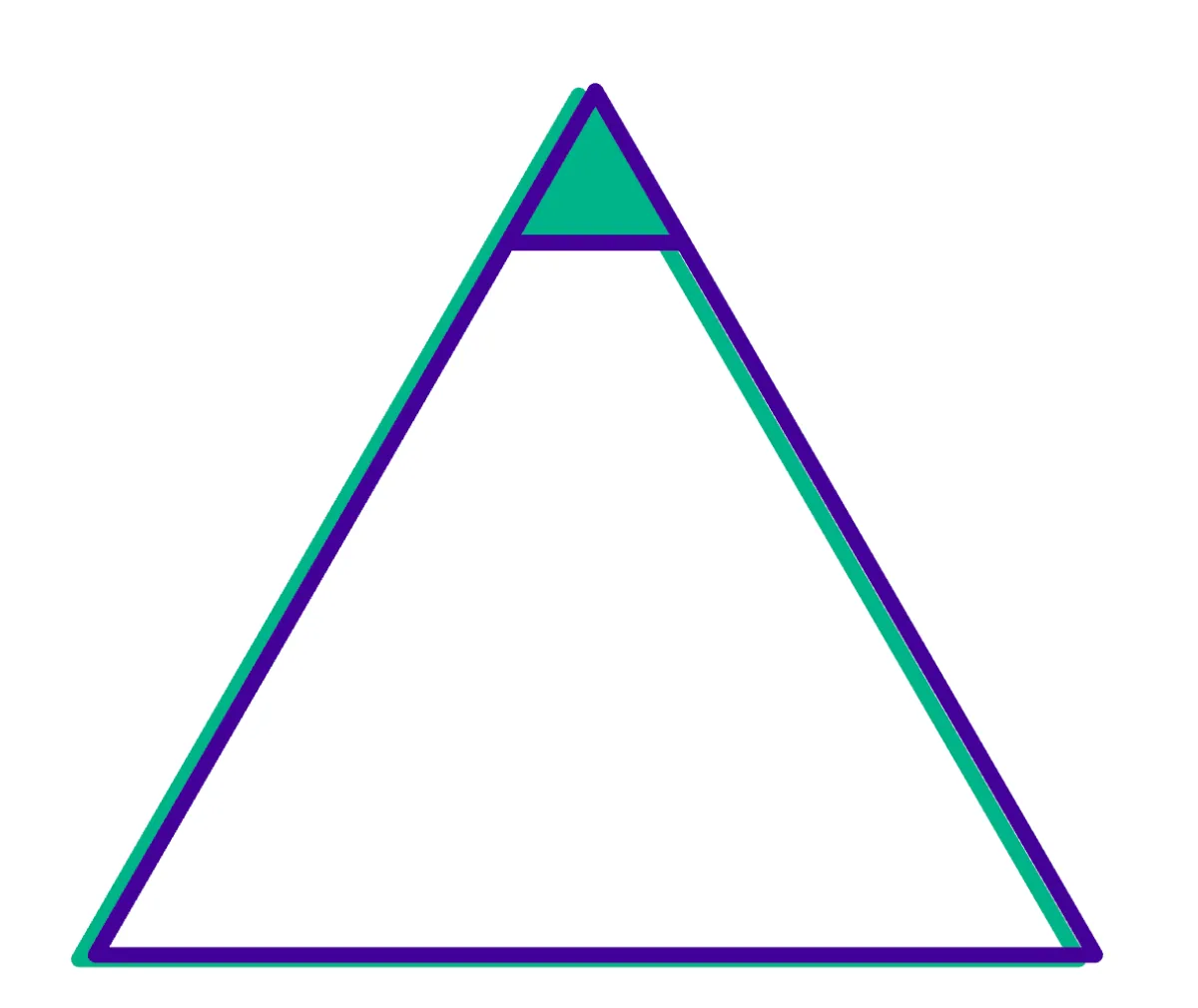
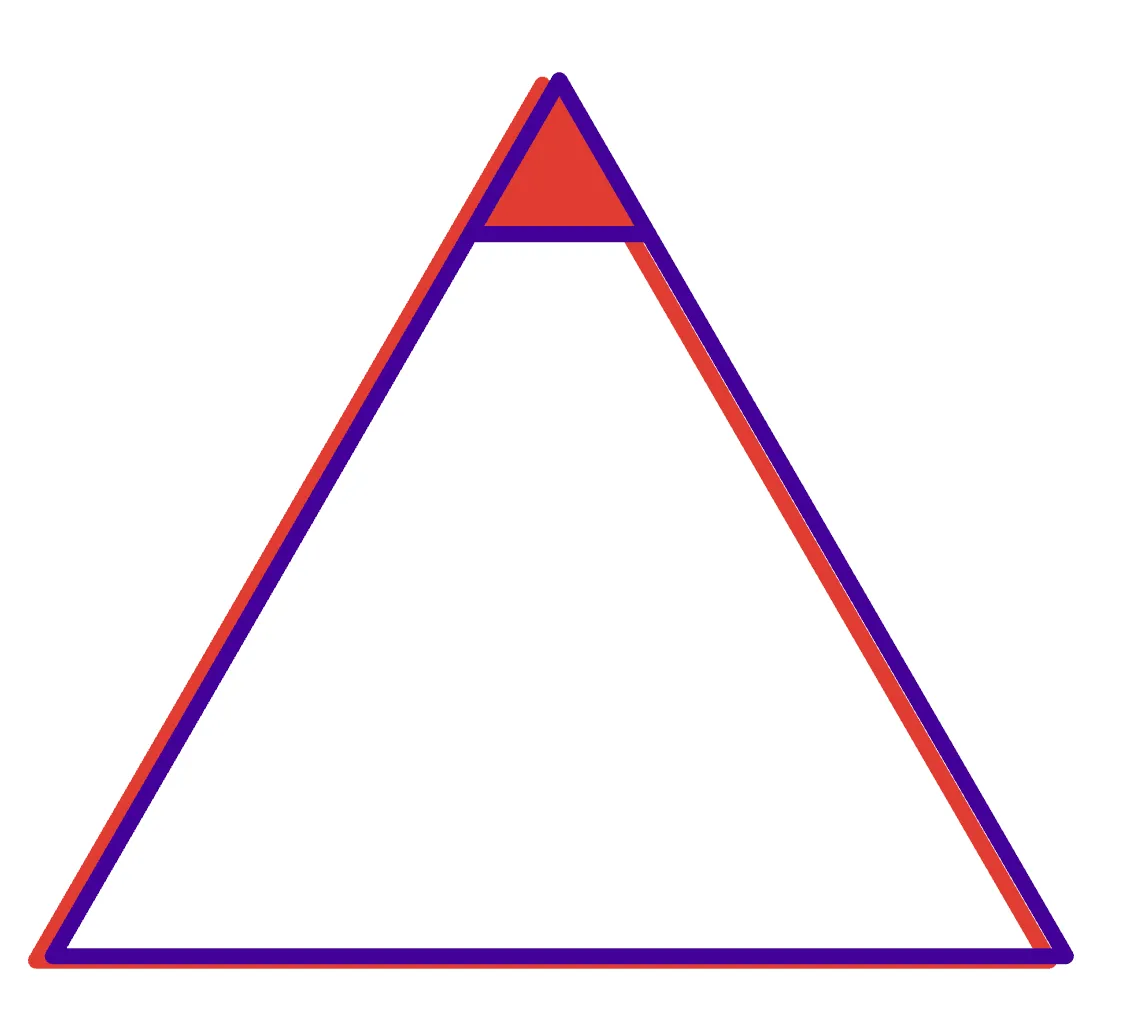
Each of these models has their benefits and their drawbacks, and like a game of stone, paper, scissors, each's strength is an answer to another's weakness.
Recombined leadership deconstructs and recombines these three models so that you get most of their benefits and almost none of their drawbacks.
Top-Down vs. Bottom-Up vs. No-Structure
So you try to get hierarchy's benefits:
clear decision-makers for each decision
clear and inspiring vision
holding people accountable for their performance and contribution (while supporting them in their development)
a way to quickly end long discussions and resolve disagreements
Without hierarchy's drawbacks:
power concentration (and -abuse)
layers of bureaucracy stifling creativity
culture of asking for permission instead of doing
decision-making bottlenecks
reduced bottom-up honesty leading to decreased quality of decisions
loneliness at the top
You get Consensus Democracy's benefits:
Every voice matters.
Everyone can be heard and feels like they belong.
Culture of equality, mutual support, inclusion and eye-level.
Decisions have high buy-in.


Without Consensus Democracy's drawbacks:
Decisions take a long time.
Everyone could veto your decisions – thus everyone is your boss.
Consensus becomes the main decision-making bottleneck – torpedoing innovation & multiplying mental load for everyone.
Vetoes and mutual blockades can erode interpersonal trust.
You get the benefits of No Formal Structure:
Quick, informal information-sharing and decision-making.
A culture of "let's try it out and see what happens".
High amounts of creativity, motivation and forward momentum.
Idea meritocracy: "The best idea wins, no matter whose idea it is."
Without No-Structure's Drawbacks:
Chaos.
Gross inefficiencies – like several teams unknowingly working on the same thing.
Unclear decision making structures lead towards consensus as the new informal norm.
As a reaction, shadow hierarchies emerge but can't be talked about openly.
Organization-wide alignment becomes harder and harder once you grow beyond 10-20 people and completely impossible once you're beyond 30 people.
The Unproductive Back-and-Forth
Most impact organizations swing wildly back and forth between these three models.
You start out with no-structure because in the beginning you're a small, motivated team that needs to figure out a business and impact model. No time and no need for a formal structure.
Then, when you grow, you usually develop some form of a flat hierarchy with a bottom-up culture.
It's the simplest way of creating a structure, and you all know and trust each other, so why create something more complex?
But because people who join an impact-organizations usually expect a lot of bottom-up involvement, you get an unclear mish-mash between top-down and bottom-up, which is the worst of all worlds.
The more people join, the more the closeness and trust from the early days dissipates.
Flat hierarchy means "too many direct reports for the founders" so you have no bandwidth to properly support or give feedback to your direct reports.
You try to delegate but difficult decisions are still escalated upwards.
In the daily grind of back-to-back meetings you have no time to zoom out and think.
You know you're the bottleneck and are working yourself towards burnout while still holding the organization back.
Meanwhile your early employees and (potential) team leads get frustrated, saying they're constantly blocked from fully taking ownership over their work – while you wonder what else you need to do so they finally step up and pull their weight.
And when performance and quality of work inevitably goes down, every necessary top-down remedy – like defining clear expectations, setting priorities or holding people accountable for their performance – is met with an uproar of moral outrage.
Add to that, that even though most of the people who join an impact-organization expect a bottom-up culture, some expect a top-down culture and some expect no-structure.
And that can also change depending on the level of stress in the organization: The more stressed they are, the more people revert back to expecting top-down.
That's why one day you're criticized for being too top-down – and next day the same people escalate a difficult decision back up to you, because they don't feel safe enough to make it themselves.
So if you're like most growing impact-organizations, you have recombined top-down, bottom-up and no-structure, but in a way that you get most of the drawbacks and few of the benefits.
More Frankenstein than Transformer.
How do you recombine better?
A leadership model that maximizes impact, not shareholder value
As an impact-organization you have a different set of advantages and disadvantages than "normal", i.e. for-owner-profit organizations.
You have highly motivated, impact-driven people, so your job as a leader is less about motivating people and more about helping people set healthy boundaries so they don't burn out.
You don't need to play incentive games, where you motivate middle managers through the status symbols they can achieve or sales people through the amount of commission they can make.
But you still need a clear, consistent, practicable leadership model that you can align your leadership team and your organization around.
You still need mechanisms to
- make decisions,
- attract and distribute resources (like money, time and motivation),
- clarify what's in and out of scope for your organization to do,
- resolve conflicts and disagreements,
- decide who's a member and who isn't
- and react to changes in the market environment.
As an impact-driven founder you'd ideally want to set up all these organizational mechanisms in a way that you...
... have a culture of open discussion where the best idea wins – especially if it didn't come from you (nothing better than someone running with an idea that is better than anything you could have come up with)
... have a company of entrepreneurs – where you keep the entrepreneurial spirit from the early days even as you grow.
... protect the initial vision – and have the ultimate say about changes in the organization's direction (long-term vision is one of the decisions where too much consensus-seeking can actually reduce courage and clarity).
... can focus on the work that's in your zone of brilliance, having a role mix that you would actually choose if you were hired into the organization now.
... are seen for your unique qualities and accepted for your shortcomings.
... can just be yourself, as a human among humans – and where everyone else can also be themselves, without putting on professional masks.
... use everyone's time and money efficiently towards creating as much positive impact as possible (because efficiency towards the right goal is actually good and necessary!)
... can ultimately just be in the company of happy people who do their best work; where you support each other and operate at a high level of quality to create meaningful impact in the world.
Especially now, with years of economical shocks, right-wing backlash and corresponding funding cuts, you can't spend too much time in meta-discussions of "how do we lead and organize?".
You can't be a servant leader, hand-holding everyone to death.
You need the whole organization to focus on delivering and innovating around your customers and your impact.
The Result of 15 Years of Experimenting at The Cutting Edge

This is me, Georg Tarne – hi! :)
When a good friend and I founded a social business 15 years ago in Berlin, the question of leadership styles didn't arise at first.
We were so focused on figuring out our business model: Trying to find a product that people would pay for and that could create a positive impact.
Hustling to get the word out and grow the company.
Every week a rollercoaster of existential crises and exhilarating wins.
Only when we grew to 12 people (and had already had to fire a few bad first hires) we had to face the question:
How do we create structure without losing our entrepreneurial spirit?
How do we think about being leaders when we don't want to make it about ourselves but about the company's purpose?
How do we have efficient operational meetings while still feeling the sense of connection and playfulness that made it all worthwhile?
We went looking, but we didn't find a model we could follow out there.
All the "experienced leaders" only had advice that felt wrong on a gut-level. ("Just be more assertive. You have to accept that it's lonely at the top." Okay, thanks for nothing, old man.)
We read Reinventing Organizations and it sounded great, but it was all so vague that there was nothing to actually implement.
(And Spiral Dynamics seemed like it could easily turn into dogma and passive-agressive sniping regarding who's on the higher level of consciousness.)
So we picked a few different new work methods that seemed helpful and started on the journey of constant experimentation, reflection and improvement.
It went surprisingly well, having the company grow 30-50% every year without VC investment, landing at an 80-people-team and mid-7-figure revenues, as well as raising over €2 million for clean water projects.
At that point, 6 years after founding, I felt that the company didn't need me anymore. I was then able to hand over all my roles bit by bit and leave as a friend, working on answering the question: Which of these experiences was specific to our situation and personalities? And which of these was generalizable?
This led to the next 9 years of working as a consultant with all kinds of organizations:
- From car manufacturers to foundations,
- from marketing agencies to democratic schools,
- from Extinction Rebellion to being involved in starting a new political party.
I've seen new work methods fail and classical hierarchies thrive. (And the other way around.)
I've seen well-intentioned consensus rounds lead to companies falling apart.
I've mediated highly escalated conflicts between co-founders, helping them finding a way forward together instead of "breaking up".
I've seen founders look back on the organization they founded, saying "I built a culture that I ultimately didn't want to work in anymore. And when I realized, I was too exhausted to change it. So I had to leave."
As they say: I've seen some shit.
After all those years in the trenches I can finally say that I have a pretty good grasp of what a leadership model is that works for impact-driven organizations. A model that actually allows you to be a full human, brilliant and flawed, and focus on the work you enjoy doing.
And that's what I want to share with you.
The Recombined Leadership Mini-Course:
It's a short video-course to hand you the basic concept and framework within 60 minutes, split up into 4 videos. Plus a few exercises, some with PDF handouts.
I give you an over-view of the main leadership paradigms of the last 100 years and how they create the contradictions you face every day.
I walk you through a more in-depth process of deconstructing and reassembling these paradigms for the specific context of impact-driven organizations.
I show you what concrete practices you need to establish to bring recombined leadership into everyday reality, including:
a) the parts that are pretty universal across most impact-driven organizations and
b) the parts that you can and must customize to your specific organization and personality.I show you what the core job description, process and skills of any leadership role in an impact-driven organization looks like. What areas of personal development you need to focus on, and which you can safely ignore.
All this will help you to:
Have more clarity which feedback in your team to take in and which to push back on.
More orientation where and how you need to spend your time in your professional and personal development
Define a leadership model for your whole organization that you can align and train everyone around.
Get the course for 29€ – once it's ready
If all that sounds good, just enter your name and email address and you'll be notified once the course is ready. Current plan is that it's ready by end of August 2026.
This is early stages of me codifying all I've learned over the past 15 years, so you won't get more than one or two e-mails from me in the meantime. Hope to have you on board.
Here's to more conceptual clarity, less time spent in fruitless meta-discussions, and more time spent on making the world more beautiful for us all.
All the best,
Georg
Imprint | Privacy Policy | Terms of Service
© Copyright 2026. All rights reserved.